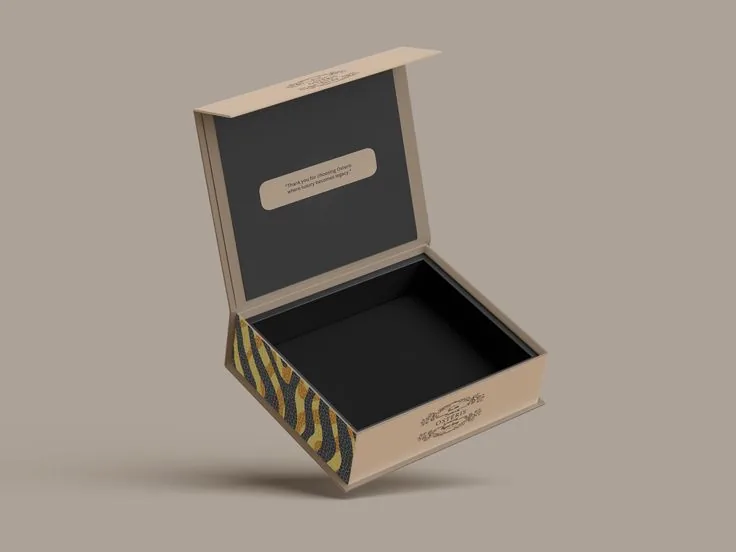
Custom Magnetic Closure Boxes | Premium Rigid Boxes With Embedded-Magnet Lids
A magnetic closure box is a rigid chipboard carton with neodymium magnets embedded in the lid and the base, hidden behind the wrap material. The lid pulls itself shut and stays shut without ribbons, clasps, or tape. The closure feel is the entire selling point: a calibrated snap that signals quality before the customer sees what is inside. Best used where the box is part of the gift: jewelry, fragrance, PR kits, premium electronics, milestone gifts.
Calibrated Magnet Strength
Neodymium magnet size and count are matched to box footprint and product weight. A 4×4 inch jewelry box uses different magnets than a 12×8 inch hamper box. Wrong calibration produces either a flimsy snap or a lid that takes two hands to open.
1200–1800 GSM Chipboard Build
Same rigid chipboard family as standard rigid boxes: 1200 GSM for smaller cartons, 1500–1800 GSM for larger or heavier products. Wrapped in art paper, linen, fabric, or specialty leather.
Hidden Magnet Pocketing
Magnets sit in routed pockets between the chipboard and the wrap so nothing telegraphs through the surface. The box reads as a clean, seamless rigid box until the lid actually closes.
Interior Built for Presentation
Satin lining, velvet-flocked trays, EVA foam inserts, ribbon pulls, custom cavity cuts. The interior is usually where most of the unboxing impression comes from.
Print, Foil, Emboss on the Lid
Soft-touch lamination, gold/silver/rose gold foil stamping, blind embossing, spot UV. The lid surface gets the heaviest finish work because that is what the recipient sees first.
Reusable Past the Unboxing
Customers tend to keep magnetic-closure boxes for storage. That extends brand presence beyond the unboxing, since the box stays in the home long after the product is consumed.
How Magnet Calibration Actually Works
A magnetic closure box is not "any rigid box plus a magnet." Magnet count, size, and pull strength have to be calculated against the box footprint, lid mass, and product weight. Under-magnetized boxes feel cheap: the lid drifts open or closes with no audible snap. Over-magnetized boxes are hard to open and feel unrefined for the same reason. We spec magnet placement at the dieline stage based on your dimensions, then pre-test the closure feel before the production run.
For most retail-scale magnetic boxes, two pairs of N35-N42 grade neodymium discs (one in each side of the lid, mirrored in the base) is the baseline. Larger or heavier boxes step up to four pairs or larger discs. Magnets sit in CNC-routed pockets, glued, and covered by the wrap so nothing is visible from the outside.
When Magnetic Beats Standard Rigid (And When It Doesn't)
Magnetic closure adds noticeable cost over a standard two-piece rigid lid-and-base. The premium is justified for products where the closure moment is part of the brand impression: engagement rings, fragrance launches, PR mailers, anniversary gifts, hero product reveals. It is rarely justified for high-volume, lower-priced retail items where a friction-fit lid does the same structural job for a fraction of the unit cost. If your product retails under $50 and the box is opened once and discarded, a tuck box or two-piece rigid is usually the better call. We'll tell you that.
Wrap Material Choices and What They Signal
The wrap is what the recipient touches first. Each material communicates something different.
- Art paper (smooth, printable): most versatile, supports any print and finish work
- Soft-touch laminated paper: muted, tactile, signals modern luxury (skincare, tech)
- Linen or cloth wrap: textured, signals craft and tradition (jewelry, watches)
- Specialty leather or leatherette: heaviest premium signal, most expensive
- Metallic or pearlescent paper: signals limited edition, special drops, fragrance launches
Categories Where Magnetic Closure Earns Its Cost
Categories where the closure premium consistently maps to higher perceived value:
- Fine jewelry and luxury watches (closure is part of the proposal moment)
- Premium fragrance and skincare hero SKUs
- PR kits and influencer mailers (the box gets photographed)
- Wedding favors, anniversary, milestone gifts
- Corporate onboarding kits and high-value client gifts
- Limited-edition product launches
Magnet Calibration Per Box
Magnet count, grade, and placement set against your dimensions and product weight. Pre-tested closure feel before production runs.
Hidden Magnet Pocketing
Magnets sit in routed pockets between chipboard and wrap. Nothing telegraphs through the surface. The box reads as seamless rigid until the lid closes.
Interior Built for Presentation
Satin lining, velvet trays, EVA foam, ribbon pulls. Most of the unboxing impression comes from the interior.
How is magnet strength chosen?
We calculate magnet count and grade from your box footprint, lid mass, and product weight. A 4-inch jewelry box uses two pairs of N35-grade discs; a 12-inch hamper box might use four pairs of N42-grade. Under-spec and the lid drifts open; over-spec and it takes two hands to open. We pre-test closure feel before the production run.
Can the magnets be felt or seen from outside?
No. Magnets sit in CNC-routed pockets between the chipboard and the wrap material. The wrap covers the pocket cleanly, so the exterior reads as a smooth rigid box surface. The closure is only obvious when the lid actually closes.
When should I use magnetic closure instead of a standard rigid box?
When the closure moment is part of the brand impression: fine jewelry, fragrance launches, PR mailers, milestone gifts. If the box is opened once and discarded with a low-priced retail item, a friction-fit two-piece rigid or a tuck box does the structural job for a fraction of the cost. Magnetic earns its cost when the box itself contributes to perceived value.
Can you make custom holographic magnetic closure boxes?
Yes. Holographic finishes are available on magnetic closure boxes through holographic foil stamping, holographic film lamination, or holographic paper wrap. Common applications: beauty hero products, limited editions, K-beauty influencer kits, and collector-edition packaging. The holographic surface plays well with the magnetic snap reveal moment, since the light shift is most visible when the lid lifts. Foil and lamination options work on lid only, base only, or full wrap.
What inserts work with magnetic closure boxes?
Satin-lined platforms, velvet-flocked trays with cavity cuts, EVA or PE foam inserts cut to product shape, ribbon pulls integrated into the lid hinge, paper trays for layered products. The lid magnets stay independent of the insert system, so the interior can be redesigned without re-tooling the closure.